


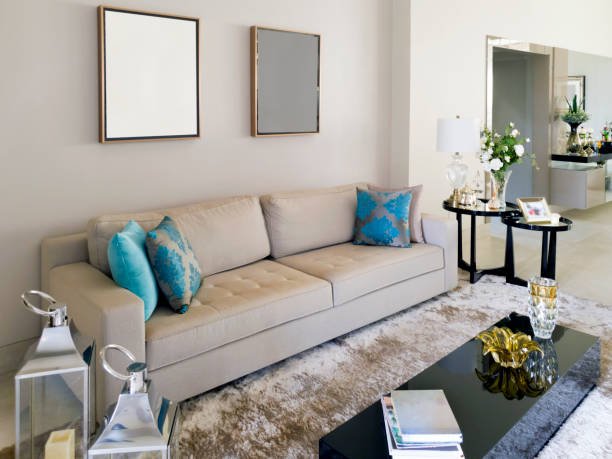
Selecting furniture for small living rooms requires careful consideration. Choosing the incorrect size or design can overwhelm your area visually, cause traffic flow issues, or make a small space feel strangely proportioned. You can’t just pick the shortest sofa on the showroom floor and expect it to work because most furniture is made for rooms that are typical in size. Because arm width, back height, leg type, and seat depth all determine how much room your sofa takes up both physically and aesthetically, scaling down is more complicated than just cutting the length by a few inches.
This tutorial focuses on sofa designs that are especially made to make the most of compact living spaces. You’ll discover which combinations offer the best seating efficiency, which design elements give the appearance of additional space, and how various designs impact the practicality and aesthetic appeal of your area. We’ll go over everything from space-saving sleepers and low-profile designs to apartment-size couches and small sectionals, assisting you in determining which design options are ideal for your particular needs and available space.
How Different Sofa Styles Address Small Spaces Are Challenging in United States of America
Choosing the smallest sofa available isn’t the best way to furnish a little living space. It involves comprehending how architectural elements produce both a visual and physical space. A 78-inch sofa with low profile, exposed legs, and slender track arms takes up a lot less visual space than one with broad rolled arms, a lofty back, and no visible legs. A totally different spatial experience, yet the same length.
For this reason, consumers are misled by “apartment-size” labels. A standard-length sofa with streamlined proportions may feel more spacious than an apartment-size sofa with large arms. Compared to a 78-inch sofa that is only 32 inches deep, a 68-inch loveseat that is 38 inches deep extends farther into your space. Measurements, arm style, back height, and leg visibility all affect how identical dimensions seem in your room, so visual weight is just as important.
The best small-space sofas address one or more of three issues: increasing seating efficiency by turning unused arm width into usable space, improving functionality by serving multiple purposes without requiring additional furniture, or giving the impression of more space through sightlines and light.
| Sofa Style | Creates Visual Spaciousness | Maximizes Seating Efficiency | Improves Functionality |
| Low-Profile & Leggy Sofas | ✓ | — | — |
| Loveseats | ✓ | — | — |
| Compact Sectionals | — | ✓ | ✓ |
| English Roll Arm Sofas | ✓ | ✓ | — |
| Armless & Slim-Arm Sofas | — | ✓ | ✓ |
| Sleeper Sofas | — | — | ✓ |
| Modular Sofas | — | ✓ | ✓ |
6 Best Sofa Styles for Small Living Rooms in United States of America in 2026
Low Profile & Leggy Sofas
Through optical illusion, low-profile couches with exposed legs give the impression of greater space. These designs provide the impression that your ceiling is higher and your walls are farther away by placing the seating area closer to the floor and maintaining modest back heights.
This effect is further enhanced by exposed legs, which let light pass beneath the furniture. According to Architectural Digest’s interior designers, furniture with legs that are visible gives your eyes visual breathing room by letting them go to the wall behind and the floor underneath. Look for sofa legs that are 4 to 8 inches tall in order to create this optical illusion. This gives the sofa adequate clearance without giving the impression that it is uncomfortably raised.
Top S ofa Leg Designs for Compact Areas:
Tapered wood legs: Inward-angled legs with a mid-century contemporary feel create visual intrigue while maintaining a light and airy design.
Metal hairpin legs: Slender metal supports give off a modern, industrial vibe while maximizing floor visibility.
Turned wood legs: a classic design that offers elegance without adding visible weight and has a thinner profile than block feet.
Sled base designs: Strong horizontal lines that provide the impression of more space are created by continuous metal frames that run the length of the sofa.
Shop Hudson’s Furniture’s top leggy sofa designs:
Lovesets
Compared to other conventional seating options, loveseats take up less physical space, giving the impression of greater space. The length of these two-person couches is usually between 52 and 64 inches, so there is more open floor area surrounding them. Even though the room’s actual square footage hasn’t changed, your brain interprets it as larger when you can see more floor and wall space.
Beyond just improving visual perception, the shorter length has other advantages. The loveseat may be positioned at angles, float away from walls, or be combined with other pieces to create conversational groupings, giving you more freedom in how you arrange your furniture. With this adaptability, you may create zones in tiny areas without having to buy a full-size sofa.
When it comes to loveseats, seating capacity is the most important factor. A loveseat is ideal for couples or folks who occasionally host because it can comfortably sit two people. You’ll need to add extra seating, such as ottomans or accent chairs, if you have a larger family or frequently host parties.
The Best Places for Loveseats:
Every inch matters in studio flats, where it’s important to clearly designate distinct areas without obstructing sight lines.
Secondary seating areas: In reading nooks, home offices, or bedrooms where you want cozy seating without overpowering furnishings.
Situations for pairing: When you wish to use two smaller pieces instead of one large sectional to create a conversational grouping.
Narrow spaces: A typical sofa will obstruct the flow and give the impression that the living room is a corridor in long, narrow spaces.
Shop Hudson’s Furniture’s top Loveseats designs:
Armless & Slim-Arm Sofas
Sofas with narrow arms and no arms turn arm space into practical sitting. This can be accomplished by either doing away with the arms completely or by choosing contemporary slim-armed designs that strike a compromise between practical functionality and seating efficiency, such as a track arm. Comfort and versatility are sacrificed with entirely armless designs. Armless sofas are best positioned against walls or in arrangements where the seating area is framed by other furniture because they lack arms to define the ends. For floating layouts where you desire distinct visual boundaries, they are less appropriate.
When to Choose Armless or Slim-Arm Sofas
When placed against walls where the architecture offers visual definition, armless designs look stunning.
Between furniture: Place armless couches between sections or next to tables, bookcases, or other structurally supporting furniture.
Making the most of seating: Select these designs if you have to cram as much sitting as you can into the allotted area.
Modern aesthetics: Armless and slim-arm designs go well with minimalist and contemporary spaces where clean lines are crucial.
Shop Hudson’s Furniture’s top armless & slim-arm sofa designs:
Modular Sofa Systems
Because of their versatility, modular sofas can be used for a variety of applications. Because these systems are made up of separate parts that join together, you can design unique configurations that precisely match the size of your space. The advantages in functionality originate from the fact that modular systems let you construct a sofa precisely as your available space permits. Numerous systems come with specialized components that allow you to personalize your arrangement, such as chaise modules, armless seats, and corner wedges. As a result, you are not constrained by the manufacturer’s predetermined measurements, which could waste inches or create unsightly spaces in your design.
Compact Sectionals
Compact sectionals use the vacant corner space left by regular sofas to optimize seating efficiency. Chaise extensions eliminate the need for separate ottomans or lounge chairs, while corner pieces transform empty spaces into useful seating. Sectionals sofa with a chaise on one end can eliminate the need for a sofa and a separate reclining chair, combining two pieces of furniture into one practical arrangement, according to interior design experts at The Spruce.
Instead of picking the smallest option from a full-size sectional line, the secret is to choose a style that has been specially downsized for smaller spaces. In square living rooms or areas with odd angles where a typical sofa arrangement wastes floor space, compact sectionals are a great option.
Qualities to Consider in Small Sectionals:
- If you move or wish to change your arrangement, the reversible chaise lets you set up the sectional for either left or right configuration.
- Modular construction: If your needs change, you can resize or reconfigure your sectional thanks to individual parts that fit together.
- Streamlined arms: Track arms or slender designs reduce extra mass at the ends while maximizing seating width.
- Scaled proportions: Including the chaise extension, overall measurements are less than 90 inches on the longest side, with depths of no more than 36 inches.English Roll Arm Sofas
English roll-arm couches preserve traditional charm while optimizing seating efficiency. Space is saved by the narrow, cylindrical arm shape that gradually curves outward as opposed to large pillow-top or panel arm designs. Additionally, comfort is not sacrificed for the efficiency of this armrest seating design. The timeless shape complements both traditional and transitional settings, and the soft roll offers a cozy place to lean your arm or rest your head while reading.
When you desire elegant elegance without the weight of fully traditional furniture, this style works well in tiny spaces with traditional or transitional decor. The fitted style gives you the desired traditional look in a more space-conscious package, feeling deliberate and refined.
What is an “apartment sofa”?
In contrast to classic sofas, which are 84 to 96 inches long, apartment sofas are sized especially for small living areas and usually measure between 68 and 80 inches. These components also have heights and depths that are proportionately sized. Apartment couches are usually 32 to 36 inches deep, although a conventional sofa may be 38 to 40 inches deep. An apartment sofa’s advantages extend beyond its reduced length. While still offering cozy sitting, the lesser depth makes more space for walking and coffee tables.
However, even though apartment sofas are designed to fit smaller spaces, the label does not ensure that the item will fit your needs or fit in your particular location. Knowing your room’s exact measurements and how various design elements impact your area is the true solution. Selecting precise measurements and design elements that complement your plan is more important than categorical shopping.
Measurements to Check Before Buying a Sofa
After deciding on the design and characteristics of the sofa that you like best, you should compare prices, making sure that the sofa’s measurements fit the space you have available. To achieve this, begin by taking precise measurements of your room, noting the length of your longest wall, the available depth, and the locations of windows, doors, and other architectural elements. When assessing particular couches, make sure to look at these important measurements:
The measurement of sofa length is the entire distance between the outsides of the two armrests.
The usable cushion space between the inside of one arm and the inside of the other arm is referred to as seating width.
- The measurement of sofa length is the entire distance between the outsides of the two armrests.
- The usable cushion space between the inside of one arm and the inside of the other arm is referred to as seating width.
- Sofa depth is the distance between the front edge of the seat cushion and the very back of the sofa.
- The distance between the front border of the seat cushion and the point where your back meets the back cushion is known as the seat depth.
- The distance between the floor and the very top of the back cushions is referred to as sofa height.
- Seith height: The distance between the ground and the top of the seat cushion where you are sitting
- Armrest height: The distance between the sofa’s arms and the floor
Read our Couch Size Guide: How to Pick the Right Size Sofa for comprehensive instructions on how to measure your area and determine the ideal sofa proportions.
Additionally, you should consider how you really use your living room and what your daily routine requires from your sofa. As you browse, think about the following questions and remember your responses:
What is the maximum number of persons who can sit comfortably at once?
Will guests staying overnight be able to use this sofa?
Do you host often?
What do you do with your sofa in the evenings?
How much additional furniture can you fit in the space?
What is the traffic pattern in your room?
For what length of time do you intend to keep this sofa?
With the correct sofa, it is completely possible to create a fashionable and comfortable living room in a little area. Instead of just picking the smallest alternative, pay attention to measurements, style nuances, and how you really use your space. If you use these tips, you’ll be able to discover the ideal small-space sofa.
Are you prepared to look at leather sofa selections that will look great in your room? Come see our selection of well-thought-out couches in every style and size at Hudson’s Furniture. Our design team is available to assist you in locating the ideal item to turn your small living area into a room you adore.
FAQs
Which sofa designs are most appropriate for tiny living spaces?
Because they provide comfort without overpowering the space, low-profile and leggy couches, loveseats, slim-arm forms, small sectionals, and modular designs all work nicely.
On a sofa, which arm types occupy the least amount of space?
When opposed to heavy rolled or pillow-top arms, the thin profiles of track arms, slim contemporary arms, and English roll arms save several inches.
Which sofa color enlarges a tiny living space?
Light neutrals like cream, beige, gray, and gentle blues reflect more light, provide visual coherence, and enlarge the space.
What dimensions should I look at before purchasing a sofa for a tiny room?
Check that the sofa can fit through stairwells, hallways, and doorways by measuring its total length, depth, seat depth, back height, and arm height.
How do I make the most of the seats in a tiny living room without packing it full?
Use corner-friendly sectionals, go for slim-arm or armless sofas, and maintain clear paths to create a clutter-free, practical seating arrangement.
Which kind of sectional arrangement is most effective in small living spaces?
Maximize seating, fit into corners, and be readily reconfigured if your layout changes with a compact L-shaped sectional that has a reversible chaise.