


Introduction
Abbreviations appear everywhere in the financial world. Banking systems, digital transactions, and government platforms often rely on short codes to represent complex institutions or services. At first glance, these abbreviations can feel confusing—almost like trying to read a secret language.
- Introduction
- What Is the Dopbnk Full Form?
- The Role of Postal Banking in Financial Systems
- Key Features of Postal Banking Services
- Benefits of Understanding Banking Abbreviations
- Dopbnk and Related Banking Terms
- Why Banking Systems Use Abbreviations
- Common Situations Where Dopbnk Appears
- Core Services Provided by Postal Banks
- How Postal Banking Supports Financial Inclusion
- The Future of Postal Banking in Digital Finance
- FAQs About Dopbnk Full Form
- Conclusion
One such term that occasionally sparks curiosity is dopbnk full form. People searching for this phrase often want to understand what it represents and why it appears in banking records, financial systems, or online transaction details.
While the abbreviation might seem unfamiliar, its meaning is actually connected to a well-known financial institution. Understanding it not only clears up confusion but also reveals how modern banking systems organise and process financial data.
What Is the Dopbnk Full Form?
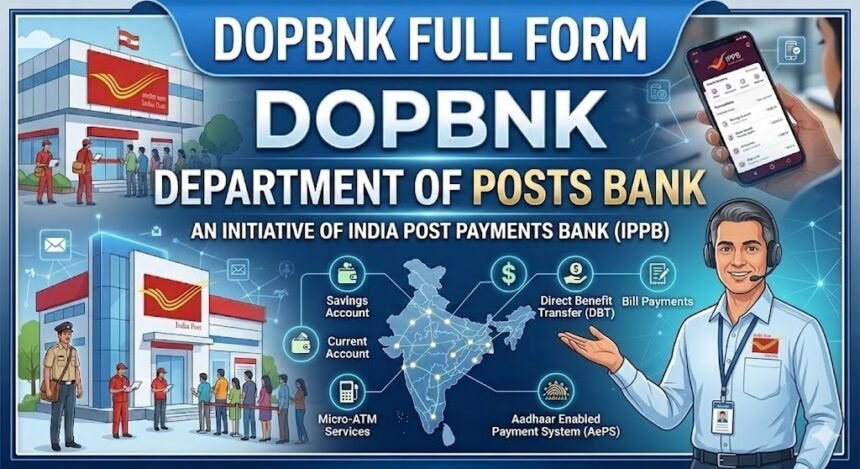
The term dopbnk full form generally refers to Department of Post Bank, commonly associated with postal banking services. In many cases, it appears in financial statements or digital banking platforms connected with postal financial services.
Postal banking has existed for decades and serves millions of people worldwide, especially in rural or underserved areas. These services provide savings accounts, money transfers, and government payment distribution through postal networks.
Because modern banking systems rely heavily on digital identifiers, abbreviations such as DOPBNK are used in transaction descriptions or financial databases. Instead of writing the full institutional name each time, systems use the shorter code for efficiency and consistency.
The Role of Postal Banking in Financial Systems
Postal banking systems have long played an important role in expanding financial access. In regions where traditional banks may not operate widely, postal networks often fill the gap by offering basic financial services.
With thousands of branches spread across towns and villages, postal systems are uniquely positioned to reach communities that may otherwise remain outside the formal banking network.
These services typically include savings accounts, fixed deposits, and government benefit transfers. By integrating digital banking tools, postal systems have modernised their services while maintaining their broad accessibility.
Key Features of Postal Banking Services
Before exploring further, it’s helpful to understand the types of services commonly offered through postal banking institutions. These services make the system valuable to millions of users. Some of the main features include:
- Basic savings accounts with low minimum balance requirements
- Secure government payment distribution
- Domestic money transfer services
- Fixed deposit and recurring deposit schemes
- Access to digital banking platforms
Benefits of Understanding Banking Abbreviations
Banking abbreviations often appear in account statements or payment notifications. At first glance they might look mysterious, yet they serve an important purpose in financial systems.
Understanding these abbreviations can help users interpret their transaction history more accurately. For example, when someone sees a transaction labelled with DOPBNK, recognising the dopbnk full form can clarify the source of the payment.
Beyond personal awareness, these codes also improve efficiency for financial institutions. Automated systems can process millions of transactions quickly by relying on standardised identifiers instead of lengthy descriptions.
Dopbnk and Related Banking Terms
| Term | Full Form | Description |
|---|---|---|
| DOPBNK | Department of Post Bank | Refers to postal banking services |
| IFSC | Indian Financial System Code | Identifies bank branches |
| NEFT | National Electronic Funds Transfer | Electronic money transfer system |
| RTGS | Real Time Gross Settlement | High-value real-time transfer |
| IMPS | Immediate Payment Service | Instant digital fund transfer |
Why Banking Systems Use Abbreviations
Financial institutions handle enormous amounts of data every day. Transactions, account details, payment records, and system communications all rely on structured information.
To keep everything organised, banks use abbreviations and codes. These identifiers allow systems to process information faster and reduce the risk of errors.
For instance, a short code like DOPBNK can instantly identify a postal banking institution within a transaction database. Instead of writing a full institutional name, the system recognises the code and processes the information efficiently.
Common Situations Where Dopbnk Appears
Many people encounter the term unexpectedly while checking their bank statements or digital payment notifications. When it appears, it usually relates to specific financial activities. Here are some situations where the abbreviation might appear:
- Government benefit transfers credited to an account
- Postal savings account transactions
- Online banking records linked to postal financial services
- Digital payment notifications referencing postal banking systems
- Account statements showing source institutions
Core Services Provided by Postal Banks
Savings and Deposit Accounts
Postal banks offer simple savings accounts designed for accessibility and reliability.
Government Payment Distribution
Many governments use postal networks to distribute pensions, subsidies, and welfare payments.
Money Transfer Services
Postal banking systems support domestic money transfers between individuals and institutions.
How Postal Banking Supports Financial Inclusion
Financial inclusion refers to ensuring that individuals and communities have access to essential financial services. Without such access, people may struggle to save money, receive payments, or participate fully in the economy.
Postal banking systems help bridge this gap by offering services in areas where commercial banks might not operate. With thousands of local branches, postal networks often reach communities that lack other financial institutions.
By combining traditional infrastructure with digital platforms, postal banks continue to expand their role in modern financial systems.
The Future of Postal Banking in Digital Finance
As technology evolves, postal banking institutions are adapting quickly. Many now offer mobile apps, digital payment platforms, and online account management tools.
These innovations allow customers to access services remotely while still benefiting from the reliability of postal networks. Digital transformation has also improved transaction speed and security across postal banking systems.
Looking ahead, experts expect postal banks to play an even greater role in supporting digital finance, especially in regions where financial access remains limited.
FAQs About Dopbnk Full Form
What is the dopbnk full form?
It typically refers to the Department of Post Bank, associated with postal banking services.
Why does DOPBNK appear in bank statements?
It often indicates that a transaction involves a postal banking institution.
Is DOPBNK a regular commercial bank?
No, it is usually connected with postal financial services rather than a private commercial bank.
Are postal banking services reliable?
Yes, they are generally operated by government postal systems and follow regulated financial procedures.
Can postal banking accounts support digital transactions?
Many modern postal banking systems now provide online and mobile banking features.
Conclusion
Understanding the dopbnk full form helps demystify a term that occasionally appears in financial records and digital banking platforms. Rather than being a complex or unknown institution, it usually refers to postal banking services connected with national postal systems. These institutions have played a crucial role in expanding financial access, particularly in rural communities. As banking continues to evolve digitally, postal banks are adapting with modern tools and services. By learning what these abbreviations represent, users can navigate financial information with greater clarity and confidence.