

Introduction
Ever noticed how a tiny string of letters and numbers can suddenly feel powerful? One moment you’re browsing, minding your own business, and the next moment someone says, “Use my code.” Boom! Curiosity kicks in. That little nudge, that quiet promise of a perk, has a name. It’s called a referral code, and it’s way more interesting than it looks at first glance.
In today’s digital world, where attention spans are short and trust is hard-earned, these codes have slipped into everyday life without much noise. They’re not flashy. They don’t scream for attention. Yet, somehow, they manage to influence decisions, spark conversations, and even build mini communities. Funny how that works, right?
This article dives deep into the idea behind referral codes, not as a technical breakdown, but as a human story. We’ll explore why they work, how they feel from both sides of the screen, and why they’ve become such a common part of online culture. Along the way, expect real talk, a few light exclamations, and a conversational tone that doesn’t try too hard. After all, nobody likes content that sounds like it’s wearing a suit to a beach party.
So, let’s jump in.
What Is a Referral Code, Really?
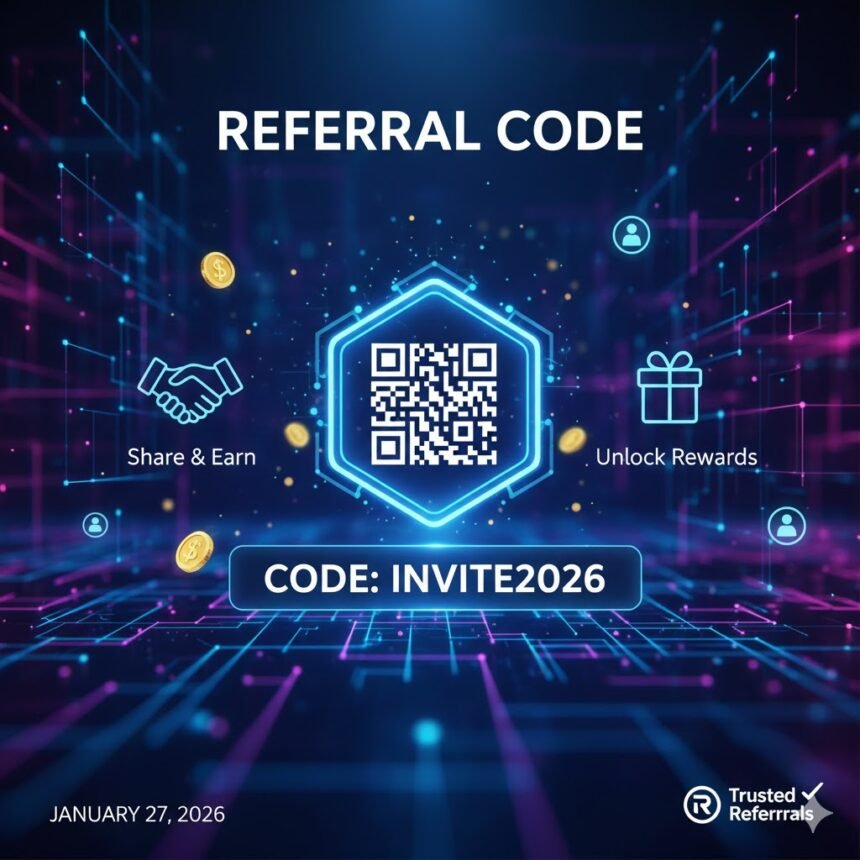
On paper, it’s simple. A referral code is a unique identifier shared by one person to invite another to try a service or product. When the new person signs up using that code, both sides often get something extra. A bonus. A discount. Maybe a free trial extension.
But strip away the technical language, and it becomes something else entirely. It’s a digital handshake.
It says, “Hey, I’ve been here. I’ve tried this. You might like it too.” That sense of personal recommendation is what sets it apart from plain advertising. No loud banners. No pushy slogans. Just one person nudging another, casually, sometimes even jokingly. And oddly enough, that’s why it works.
The Psychology Behind Why People Use Referral Codes
Let’s be honest for a second. People don’t trust ads the way they used to. Pop-ups, sponsored posts, and shiny promises have worn us down. We scroll past them without a second thought. But a message from a friend? That’s different. Here’s what’s happening behind the scenes:
- Social proof kicks in
If someone you know is using something, it feels safer. Less risky. - Mutual benefit feels fair
Both sides get rewarded. Nobody feels played. - It feels personal, not corporate
Even though a company set it up, the interaction feels human. - Low-pressure decision-making
No one’s forcing you. It’s just an option.
By the time you realize it, you’re already considering it. Sneaky? Maybe. Effective? Absolutely.
From Casual Sharing to Digital Habit
At first, referral codes were shared quietly. A quick email. A private message. Now? They’re everywhere. Social media bios, blog posts, comment sections, and even group chats that weren’t meant for marketing in the first place. What changed? Well, habits did.
People started seeing these codes not just as favors, but as tools. A way to save money. A way to earn a little something extra. And sometimes, a way to feel included in a bigger circle. Before long, sharing became second nature.
Why Businesses Love Referral Codes So Much
From a business perspective, referral codes are pure gold. Not in a loud, flashy way, but in a quiet, reliable one. Here’s why companies keep coming back to them:
- Lower marketing costs
Paying customers to spread the word is often cheaper than running ads. - Higher-quality users
People who join through referrals tend to stick around longer. - Built-in trust factor
Recommendations carry more weight than promotions. - Easy tracking
Codes make it simple to see what’s working.
And the best part? Businesses don’t have to beg for attention. The users do the talking.
The Human Side of Sharing
Now, let’s flip the perspective. Imagine this. You’ve been using a service for weeks. It’s helped you out. Made life easier. Saved you time. Then one day, you get a message saying, “Share your code and get rewarded.” Suddenly, you’re not just a user. You’re part of the loop.
You might share it with:
- A close friend who’s been complaining about the same problem
- A sibling who’s always looking for deals
- A follower who trusts your opinion
And when they sign up? There’s a tiny spark of satisfaction. Not just because of the reward, but because you helped someone discover something useful.
That feeling matters.
Referral Codes and Trust in the Digital Age
Trust online is fragile. One bad experience can ruin it. That’s why referral codes quietly rebuild trust in small, manageable ways. They rely on existing relationships. On conversations that would happen anyway. Instead of shouting, they whisper. And in a noisy internet, whispers stand out.
Common Myths Around Referral Codes
Despite how common they are, a few myths still float around. Let’s clear them up.
“They’re just scams, right?”
Not really. While scams exist everywhere, referral codes themselves are legitimate tools used by real companies. The key is knowing the source.
“You don’t really get anything.”
Sometimes the reward is small. Other times, it’s surprisingly useful. It depends on the platform, not the concept.
“It’s awkward to share.”
It can be, if done poorly. But when shared naturally, it feels like advice, not selling.
How People Usually Share Referral Codes
People have gotten creative. Very creative. Some common ways include:
- Casual mentions in conversations
- Social media posts with personal stories
- Blog articles that explain real experiences
- One-on-one messages with context
Notice something? The best ones don’t feel forced.
Ethical Sharing: Where’s the Line?
Here’s where things get interesting. Sharing is great. Spamming? Not so much. Ethical sharing means:
- Being honest about your experience
- Not overselling benefits
- Respecting people’s space
- Accepting a “no” without pushing
When done right, it strengthens relationships instead of straining them.
Referral Code Culture in Online Communities
In online forums and groups, referral codes have become a kind of currency. Not money, exactly, but value.
People exchange them like tips. Sometimes they even build threads dedicated to sharing. It creates a sense of collaboration, a “we’re all in this together” vibe. Of course, moderation matters. Without it, things can spiral fast.
FAQs
What exactly does a referral code do?
It links a new user’s signup to an existing user, allowing both to receive benefits based on the platform’s rules.
Are referral codes free to use?
Yes, using a referral code usually costs nothing and often unlocks bonuses or discounts.
Can referral codes expire?
Yes, some codes have time limits or usage caps depending on the company.
Is it safe to use a referral code from a stranger?
It depends on the platform. Always check the service itself, not just the code source.
Why do companies offer referral rewards?
Because personal recommendations often lead to more loyal and engaged users.
Final Thoughts
At the end of the day, a referral code is more than just a string of characters. It’s a small bridge between people in a digital space that often feels disconnected. It works because it leans on trust, shared experience, and mutual benefit.
No hype. No pressure. Just a simple exchange. And maybe that’s why it’s lasted so long. In a world obsessed with the next big thing, sometimes the quiet ideas stick around the longest. So next time someone sends you a code, pause for a moment. There’s a story behind it, even if it’s a small one.